
You can maintain a straight back by aligning your ears over your shoulders and your shoulders over your hips while keeping your feet flat on the floor. This neutral position reduces strain on your spine and muscles during long workdays.
Equipment for a straight back
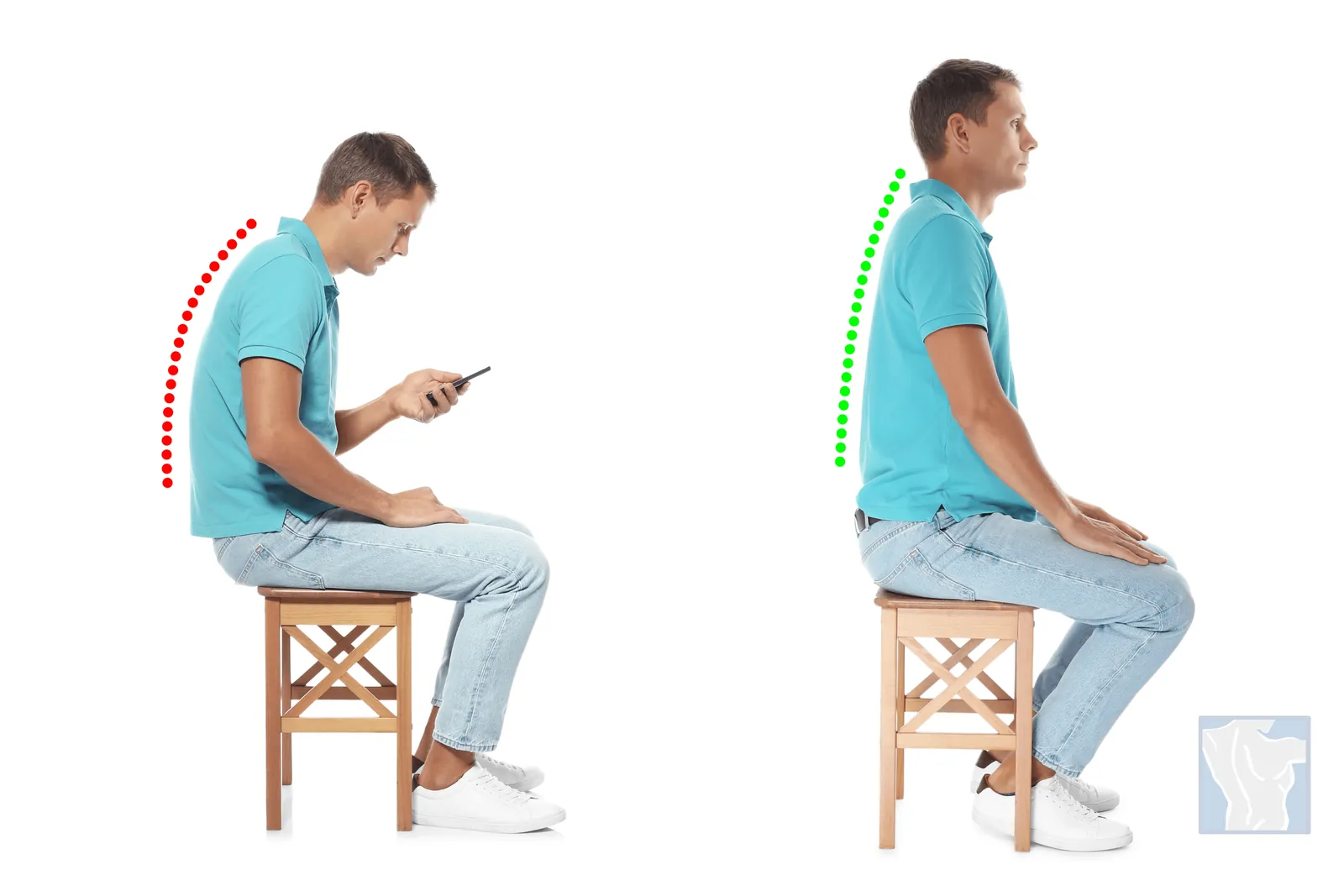
To support your spine effectively, you need a setup that promotes neutral alignment. Having the right equipment prevents you from leaning forward or slouching into a C-shape.
- An adjustable chair that supports the natural curve of your lower back.
- A desk at a height that allows your elbows to rest at a 90-degree angle.
- A computer monitor positioned so the top line of text is at or slightly below eye level.
- A footrest if your feet don’t touch the floor when your chair is set correctly.
If you can’t find a chair with lumbar support, a small rolled towel placed against your lower back works as a temporary fix. However, a chair that lacks firm support will always require more effort to maintain your posture.
Steps to achieve a neutral spine
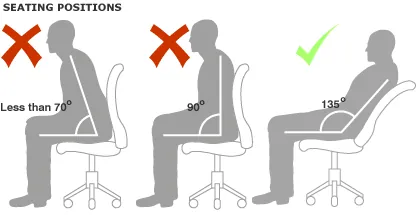
- Position your chair so your feet are flat on the ground with your knees bent at a 90-degree angle.
- Sit all the way back in the seat to ensure your lower back presses against the lumbar support.
- Align your head so your ears are directly over your shoulders, avoiding the tendency to push your chin forward toward the screen.
- Relax your shoulders downward, keeping them away from your ears to prevent tension in your neck and upper back.
- Check your elbow position, ensuring they stay close to your body and bent at roughly 90 degrees while typing.
- Adjust your monitor height so your eyes look directly at the top third of the screen without tilting your head.
- Stand up or stretch every 30 to 60 minutes to reset your muscles, as prolonged static sitting often leads to slouching.
Tip: If you find yourself sliding forward, place a small cushion behind your lower back to bridge the gap between your spine and the chair.
Careful: Avoid crossing your legs for long periods, as this pulls your pelvis out of alignment and creates uneven pressure on your hips.
Adjustments based on your work environment

Posture needs change depending on your equipment and the duration of your task. It’s always safer to start with a standard setup and add specific supports, such as a footrest or monitor riser, only if you still feel discomfort.
| Work Situation | Time to Adjust | Key Difference | What to Monitor |
|---|---|---|---|
| Office Chair | 2 minutes | Full back support | Lumbar curve contact |
| Kitchen Chair | 5 minutes | Need extra padding | Pelvis tilt forward |
| Standing Desk | 3 minutes | Elbow height shift | Shoulder relaxation |
| Laptop Use | 5 minutes | External keyboard | Eye level alignment |
How to verify your posture
A good posture result feels balanced, with no single muscle group bearing all the weight. If you feel tightness in your lower back or neck after only 20 minutes, your spine is likely out of its natural, neutral position. The Occupational Safety and Health Administration suggests that maintaining these neutral body positions reduces the risk of musculoskeletal disorders. To prevent this, ensure your weight is distributed evenly across your seat and that you aren’t favoring one side over the other.
Maintenance and daily habits
Consistent posture requires adherence to the standard of neutral alignment published by the Occupational Safety and Health Administration. You should clear your workspace of clutter that forces you to reach or twist, as these movements pull your spine out of its straight position.
Save your preferred chair settings by marking the height on the base if you share the desk. These habits need to be practiced daily to become automatic, though you should reset your position every time you sit down after a break.
Alternative methods for spinal support
Using a stability ball
Replacing your chair with a stability ball forces your core muscles to engage constantly. This helps you develop the strength to maintain a straight back, but it should only be done for 30-minute intervals to avoid fatigue.
Incorporating standing breaks
A standing desk allows you to shift your weight between legs. This variation prevents the stiffness caused by static sitting, though you must still focus on keeping your shoulders back and your head level while standing.
Physical therapy guidance
If you experience chronic pain, a physical therapist can provide custom exercises to strengthen your core and back. This professional help is more effective than any chair adjustment for long-term postural health and pain management.
Frequently asked questions
How long should I sit with a straight back?
You should aim to maintain a neutral, straight back for the duration of your work, but you must take a break at least every 60 minutes. Prolonged static positions eventually cause muscle fatigue regardless of your posture.
Is it safe to use a back brace?
No, using a back brace for everyday work is generally discouraged by experts because it makes your core muscles weaker over time. You should rely on your own muscle strength and proper chair support to hold your spine straight.
Why does my back hurt when I sit straight?
Your back hurts because your muscles aren’t used to the strain of holding your spine in a neutral position. Start by sitting straight for 10-minute intervals and gradually increase the time as your core strength improves.
How do I know if my chair is the right height?
Your chair is at the right height when your feet are flat on the floor and your thighs are parallel to the ground. If your knees are higher than your hips, your chair is too low and needs adjustment.
Can I sit with a straight back on a couch?
No, couches are usually too soft and deep to support a straight back. If you must sit there, place a firm pillow behind your lower back to help maintain your natural spine curve and prevent slouching.
What happens if I keep slouching?
Slouching increases pressure on spinal discs, potentially causing chronic neck and shoulder pain. You can prevent this by performing simple shoulder rolls and neck stretches whenever you notice your posture slipping.
Conclusion
Small adjustments make a big difference, so don’t worry if you catch yourself slouching occasionally. It takes time for your body to build this new habit. Why not set a gentle alarm on your phone for every hour? It’s a simple way to remind yourself to reset your posture throughout the day.