
Packing dining chairs requires protecting joints, preventing fabric tears, and shielding finishes from scratches. Preparing each piece properly ensures your dining set arrives at your new home without scuffs, snapped rails, or crushed padding.
Key Takeaways
- Clean and dry every chair surface before wrapping to prevent trapped grit from grinding into wood finishes.
- Disassemble removable chair legs and screw-on cushion pads to save cargo space and prevent joint snapping.
- Wrap structural points using a minimum of two layers of commercial moving blankets and heavy-duty bubble wrap.
- Never apply adhesive packing tape directly to finished wood, leather, or textile upholstery.
- Load chairs into moving vehicles using the classic “nesting pair” method to maximize vertical trailer clearance.
Gather Required Packing Supplies
Proper materials prevent damage.
| Packing Material | Recommended Specification | Primary Purpose |
|---|---|---|
| Moving Blankets | Quilted non-woven or cotton-poly (72″ x 80″) | Absorbing shock, covering large wooden frames |
| Stretch Wrap | 80-gauge cast film (15 to 18-inch roll) | Securing blankets without adhesive residue |
| Bubble Wrap | Medium 5/16-inch or large 1/2-inch bubbles | Protecting delicate turned legs and rungs |
| Corrugated Cardboard | Single-wall sheets or edge protectors | Shielding pointed corners and foot edges |
| Plastic Mattress/chair Bags | 2-mil to 4-mil polyethylene covers | Moisture and dust protection for upholstery |
Buy packing tape, a marker, and resealable bags.
Prepare Chairs Before Wrapping
Before wrapping furniture, thorough prep work eliminates hidden hazards that cause permanent surface degradation during a move.
Dust the frame, rails, and seat underside. Vacuum cushions to remove debris. Trapped dirt can scratch finishes.
Allow fabric to dry completely. Trapped moisture invites mildew.
Warning: Never apply packing tape across polished timber surfaces, as the adhesive chemically bonds to shellac, varnish, and lacquer, stripping away the top finish upon removal.
Disassemble Parts to Save Space
Removing components reduces the risk of structural failure.
Remove Removable Legs
Inspect the underside of the seat frame. Many contemporary dining chairs feature bolt-on timber or metal legs. Use an Allen wrench or drill to remove fasteners. Keep washers paired with their bolts. Tape a labeled bag of hardware to the underside of the seat.
Detach Seat Cushions
Seat pads are often held by four screws. Remove and wrap each cushion individually. This prevents fabric from rubbing against wood during transit.
How to Pack Dining Chairs Step-by-Step
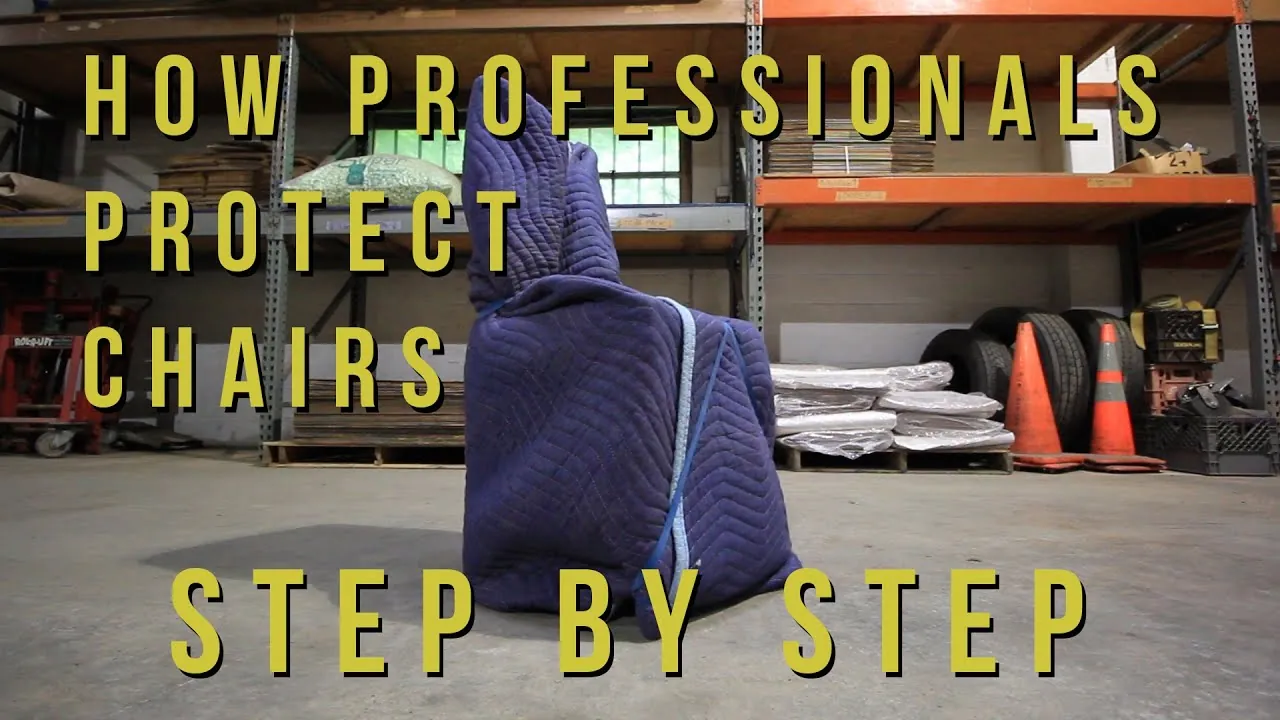
Packing dining chairs properly requires a systematic approach from the ground up to guarantee total protection against road vibration.
Step 1: Pad the legs –> Step 2: Shield the seat –> Step 3: Cover the back –> Step 4: Secure with film
- Protect the legs and stretchers: Cut strips of 5/16-inch bubble wrap approximately 8 inches wide. Wrap each chair leg from the foot upward to the seat rail, overlapping each pass by 2 inches. Secure the wrap to itself with a single band of tape around the plastic.
- Cap the feet: Slide cardboard edge guards or folded corrugated squares under each chair foot. This stops bare leg ends from punching through moving blankets when placed on the truck floor.
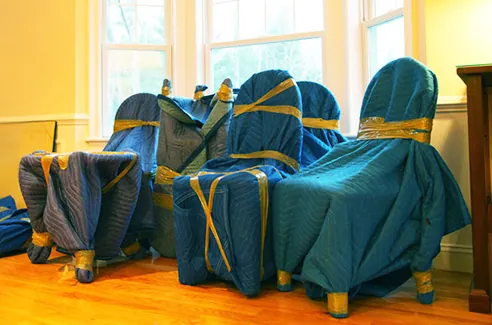
- Wrap the primary body: Drape a standard 72″ x 80″ quilted moving blanket over the entire chair back. Pull the excess blanket down over the seat pan, wrapping the surplus fabric around the sides and underneath the frame.
- Bind the protective layer: Hold the blanket in place with 80-gauge stretch wrap. Begin wrapping at the crown of the chair back, spiraling down around the backrest, encircling the seat, and anchoring onto the upper sections of the legs.
- Add outer impact guards: For antique spindle-back chairs, place a flat panel of corrugated cardboard across the front and rear face of the spindles before wrapping to distribute exterior pressure evenly.
How to Pack Upholstered Dining Chairs
Upholstered chairs face threats like snagging, staining, and grease.
Wrap fabric surfaces in acid-free paper. Avoid bubble wrap or newsprint on leather to prevent impressions or ink transfer.
Slide a plastic slipcover over the chair. After the plastic cover is positioned, apply a quilted furniture pad over the entire assembly and bind it with stretch wrap. This guards against moisture and impacts.
Pro Tip: Place a sheet of plain cardboard over upholstered seat cushions before pulling the stretch wrap tight, preventing deep, permanent compression creases in dense foam padding.
Packing Non-Standard and Armchair Styles
Different chair profiles require adjusted packing tactics to protect unique stress points.
| Chair Style | Key Vulnerability | Tailored Packing Technique |
|---|---|---|
| Captain’s Armchairs | Arm joints and scroll handles | Wrap arms separately with dense bubble sleeves before padding the main body. |
| Parsons Chairs | Tall, thin back frame | Fasten rigid corrugated sheets to front and back spans to resist lateral snapping. |
| Stacking Metal Chairs | Surface-to-surface metal gouging | Slip corrugated pads or scrap cardboard between seats before stacking. |
| Folding Dining Chairs | Hinge pinching and leg rattling | Fold completely, bundle in facing pairs, and slide into a specialized wardrobe box. |
Safely Load Chairs into Moving Trucks
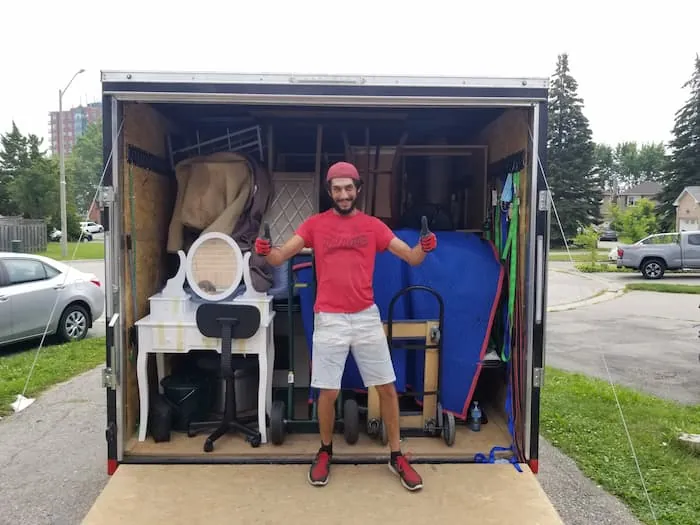
Proper positioning ensures your dining chairs survive transit.
Use the “nesting” technique to save space:
- Place the first wrapped chair flat on its four legs with its back rest flush against the truck’s interior side slat.
- Take a second wrapped chair, invert it upside-down, and set its seat pan directly onto the seat pan of the base chair, pointing its legs straight toward the truck ceiling.
- Slip a folded moving pad between the two seats to eliminate rub friction.
- Run a heavy-duty ratchet strap or nylon e-track webbing through the lower frames, cinching the pair directly to the wall rails.
Never stack heavy plastic totes or book boxes on top of inverted chair legs, as this puts immense stress on the mortise-and-tenon joints below.
Related guides
- How Many Dining Room Chairs Do I Need for Your Table Size
- My Honest Review: Gaming Chair – 2026 Guide
- My Honest Review: Gaming Chair – 2026 Guide
Frequently Asked Questions
Can I stack dining chairs in a moving truck?
You can safely nest traditional wooden dining chairs seat-to-seat by turning the top chair upside down and placing a padded moving blanket between them. Never stack non-stackable chairs four or five high on their legs, as road vibration will crack the lower rails and shear connection hardware.
How many moving blankets do I need for each dining chair?
Plan on using one full-sized 72″ x 80″ quilted moving blanket for standard armless side chairs. Larger captain’s chairs, deep armchairs, or chairs with tall Parsons backs generally require two full blankets to cover all exposed surfaces and protruding arms from top to bottom.
Should I take the legs off my dining chairs to move?
Yes, you should remove the legs if the chair uses bolted or screwed attachments. Detaching the legs eliminates long leverage points that snap during sudden shifts in transport, saves cubic footage inside your truck, and makes the main seat frames easier to crate.
How do I protect delicate chair leg rungs?
Protect decorative rungs and lower stretchers by wrapping them individually in layers of 5/16-inch bubble wrap before covering the full chair. Reinforce narrow turned rungs by taping split foam pipe insulation sleeves directly over them, which stops heavy impacts from snapping slender wood.
Will plastic stretch wrap ruin the finish on wooden chairs?
Direct contact with plastic stretch wrap can trap ambient moisture or melt against wooden finishes during high heat, leaving cloudy patches on shellac and varnish. Always wrap the chair frame in paper, moving blankets, or textile pads first, and apply stretch wrap only over those protective layers.
Conclusion
Once everything is safely tucked away in the moving truck, you can breathe a sigh of relief. Your furniture will stay secure throughout the journey, arriving ready for your first meal in the new space. Don’t forget to keep your hardware kit handy, as you’ll need it to reassemble everything quickly.