
You find the right furniture by matching wood tones to your existing floor and choosing a frame style that echoes your room’s main lines. Prioritizing material, scale, and color harmony helps you choose a desk that matches your home decor.
Choosing a desk that matches your home

Before you shop, gather these items to ensure your new workspace fits your home’s aesthetic:
- A measuring tape to record the exact floor space.
- Paint swatches or fabric samples of your curtains and rugs.
- A phone camera to capture the room’s lighting at different times.
- A notepad to list the finish of your current wood furniture.
- A painter’s tape roll to mark the desk footprint on your floor.
If you’re unsure of the room’s style, you can check the interior design principles provided by the Whole Building Design Guide for guidance on scale. Swapping wood for metal is a common choice, but avoid mixing more than two distinct metal finishes in one room.
Steps for selecting your new desk
- Measure your available floor space using a tape measure to ensure you leave at least 30 inches of clearance for your chair.
- Identify the dominant wood tone or metal finish of your room’s existing furniture to ensure the desk finish complements the environment.
- Select a desk shape that mirrors the room’s architecture; use clean, straight lines for a modern space or curved, ornate legs for a traditional room.
- Check the desk height against your preferred chair to ensure your elbows sit at a 90-degree angle when typing.
- Place painter’s tape on the floor where you want the desk to sit to visualize the visual weight before you commit to the purchase.
Tip: People often forget to measure the path to the room, which leads to desks that don’t fit through door frames.
Careful: Don’t place a desk directly against a radiator or heater, as the heat can warp wood finishes over time.
Situational adjustments for your workspace
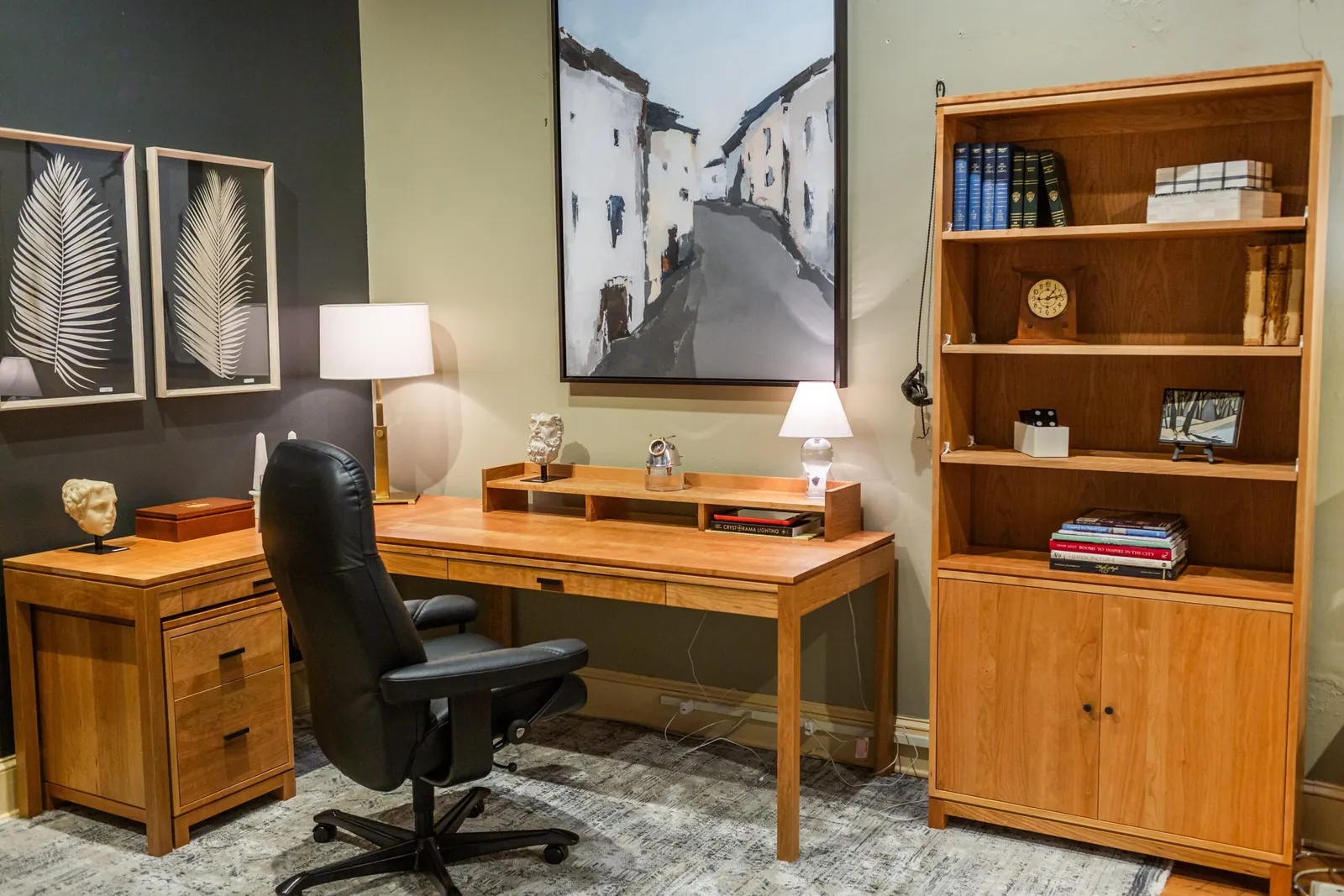
The time and effort required to find the perfect piece depend on your room’s layout and your design goals.
| Situation | Time/Cost | Difference | Watch for |
|---|---|---|---|
| Small corner | Low effort | Limited space | Clutter buildup |
| Large office | High effort | More furniture | Color balance |
| Modern style | Low cost | Simple designs | Cold aesthetic |
| Antique room | High cost | Unique pieces | Finish matching |
It’s always safer to start with a minimalist setup and add decorative elements later than to buy a large, ornate desk that overwhelms the room.
Judging the final look
A desk matches well when its finish reflects the undertones of your other furniture, such as matching warm walnut with existing oak. A poor match happens when the desk’s “visual weight”—how heavy or solid it looks—clashes with the light, airy feel of the rest of the room.
To prevent this, ensure the desk legs match the thickness of your other furniture legs. If the desk looks like it belongs in a different house, it’s likely because the wood undertones are clashing, such as mixing cool gray-toned wood with warm honey-toned wood.
Standards for home office safety
Once your desk is in place, clear away all packaging materials and secure any loose cables to prevent tripping hazards. Perform a quick check of the desk’s stability every six months to ensure screws remain tight. If you have any concerns regarding the structural integrity of your furniture, consult a professional carpenter or the original manufacturer for official support.
Alternative ways to shop

Custom furniture makers
Ordering a custom piece allows you to choose the exact wood stain and dimensions to match your home perfectly. This increases the cost and lead time significantly but ensures a seamless aesthetic result.
Refinishing existing pieces
If you find a desk with the perfect shape but the wrong color, you can sand and stain it yourself. This is a low-cost, high-effort way to get a custom look on a budget.
Modular desk systems
Modular units let you configure a workspace that fits your room’s specific corners or alcoves. This is ideal for irregular rooms, though it may result in a more industrial appearance than single-piece furniture.
Frequently asked questions
How long does it take to find a matching desk?
It takes about 2 to 4 weeks of active searching to find a piece that truly aligns with your existing decor. This assumes you’re checking both online retailers and local furniture showrooms for specific wood tones.
Is it safe to buy a desk without seeing it?
No, it’s risky because screen colors often misrepresent the true wood grain or finish of the furniture. Always check the manufacturer’s return policy or request a small wood swatch before you finalize your purchase.
Can I mix wood tones in a room?
Yes, you can mix tones if you maintain a consistent undertone, such as keeping all wood pieces in the “warm” category. Use a rug to act as a buffer between the desk and other wood furniture.
What happens if the desk is too tall?
If the desk is too tall, you’ll experience shoulder and neck strain during daily use. You can fix this by using an adjustable-height chair or adding a footrest to align your body properly.
How much space do I need behind the desk?
You need at least 36 inches of space behind the desk to allow for easy chair movement. This assumes you’re using a standard office chair with wheels that requires room to slide out safely.
Conclusion
Choosing a desk that feels like a natural part of your home requires patience and a focus on how the piece relates to the items already in your space. By measuring carefully and staying consistent with your room’s color palette, you create a workspace that’s both functional and visually balanced.