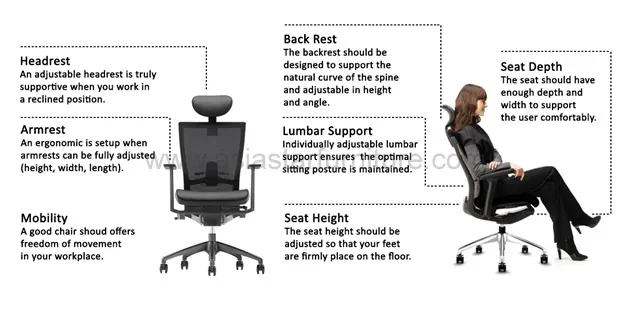
To pick an office chair that protects your spine during long work sessions, prioritize adjustable lumbar support and seat depth. If you are under 5’4″ or over 6’2″, look for models with specialized height ranges instead of standard ones.
Office chair comparison table
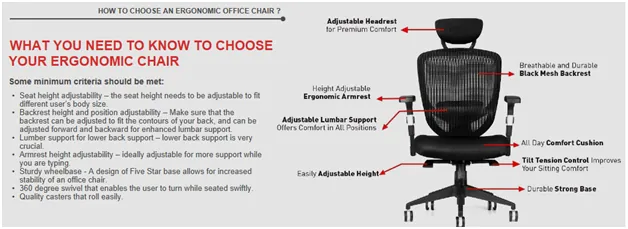
You can compare common seating options based on their typical features. This table assumes standard build quality; for high-end ergonomic models, expect better durability but higher prices.
| Method | How long | Effort | Cost | Best for |
|---|---|---|---|---|
| Task chair | 5-8 years | Low | Low | Basic desk work |
| Ergonomic chair | 10+ years | Medium | Medium | Daily office use |
| Executive chair | 7-10 years | Low | High | Occasional meetings |
Standard task chair selection
A basic task chair works well for short periods of sitting. Follow these steps to find a good fit:
- Adjust the seat height so your feet rest flat on the floor with your knees at a 90-degree angle.
- Check that the backrest supports your lower back curve without pushing your shoulders forward.
- Test the armrests to ensure your elbows stay close to your body while typing.
These chairs are excellent for guest rooms or home setups where you sit for less than two hours a day. The main weakness is a lack of deep recline or tension control. If you have chronic back pain, consult the ergonomic workstation guidelines published by the Occupational Safety and Health Administration before buying.
High-performance ergonomic chair selection
Ergonomic chairs offer the most customization for your body. Use this process to set one up:
- Slide the seat pan forward or backward until you have a two-finger gap between the edge of the seat and your knees.
- Lock the tilt mechanism at a 90-degree angle to keep your pelvis neutral.
- Set the armrest width so your shoulders remain relaxed, not hunched toward your ears.
These chairs provide the best long-term spinal support for full-time office workers. A common mistake people make is ignoring the seat depth, which restricts blood flow to the legs and causes numbness. These chairs aren’t for people who prefer a soft, “sinking” feeling, as they use firm tension to maintain posture.
Executive chair selection
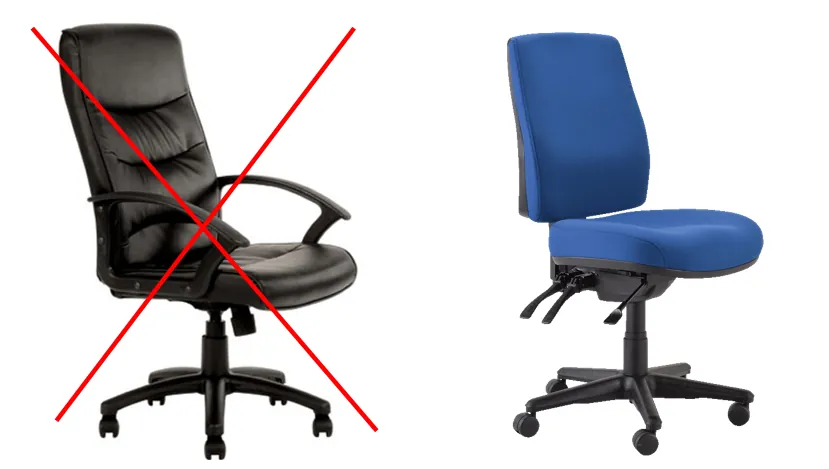
Executive chairs prioritize comfort and style for long administrative sessions. Follow these steps to evaluate one:
- Sit back fully to ensure the headrest supports the curve of your neck and the base of your skull.
- Lean back to check if the tension control allows for a smooth, balanced recline.
- Feel the padding density; it should resist your weight without collapsing to the frame within minutes.
These chairs are great for long meetings or reading tasks. The trade-off is that they often lack the fine-tuned adjustments found in ergonomic models, making them less ideal for intensive typing. A limit to watch for is the weight capacity, which varies by model; always check the manufacturer’s sticker under the seat to confirm the safety rating for your body weight.
How to choose the right office chair for your needs
You should choose a specific chair type based on your daily routine. If you’re in a hurry, buy a standard task chair, as it requires the least amount of complex adjustment. If you’re doing this for the first time, pick an ergonomic chair because its wide range of settings allows you to correct errors in your posture. If you want the best possible result regardless of cost, select a premium ergonomic chair with a syncro-tilt mechanism. The core trade-off remains between the instant comfort of plush padding and the long-term health benefits of active, adjustable support.
Essential rules for any chair choice
Regardless of the model you pick, a few rules apply to everyone. Always verify the seat height range against your own leg length to ensure your feet never dangle off the floor. Check the base stability by looking for a five-point star design, which reduces the risk of tipping. Proper assembly is vital; if the chair requires complex tools or has loose bolts, you risk a mechanical failure. If you’re unsure about the assembly process, hire a professional technician or ask the retailer for a pre-assembled unit to avoid potential injury or warranty issues.
Frequently asked questions
Can I use a dining chair as an office chair?
No, you shouldn’t use a dining chair for daily work because it lacks the necessary lumbar support and seat depth adjustments. Sitting in a non-ergonomic chair for long periods increases the strain on your lower back and neck muscles.
How long should an office chair last?
A quality office chair has a long lifespan, assuming you use it for standard 8-hour workdays. The exact duration varies based on the quality of the hydraulic cylinder and the density of the seat foam used by the manufacturer.
Is it safe to buy a used office chair?
Yes, it’s safe if you check the gas cylinder for leaks and ensure all adjustment levers work smoothly. Avoid chairs with visible tears in the fabric or wobbling bases, as these signs indicate the internal frame may be damaged.
What happens if my chair seat is too high?
Your feet will likely dangle or lose contact with the floor, which puts pressure on the back of your thighs. This restriction stops blood flow and causes your legs to fall asleep within 15 to 30 minutes of sitting.
How much should I spend on an office chair?
You should expect to pay a modest amount for a reliable chair with basic ergonomic features. The final price depends on the materials used, such as mesh versus leather, and the number of adjustable components included in the model.
Why does my back hurt after sitting?
Back pain usually stems from a chair that fails to support your natural spinal curve or has an incorrect seat depth. You can resolve this by pressing your lower back firmly against the lumbar support and keeping your feet flat on the floor to maintain proper alignment.
Conclusion
Finding the right fit doesn’t have to be a chore, but you shouldn’t rush the decision. Once you’ve narrowed down your favorites, visit a local showroom to test them out in person. You’ll be glad you did, as your body will definitely thank you for the extra effort later on.
Related guides