
To pick the right dining table, measure your room’s floor space and subtract at least 36 inches from every side to ensure guests have room to pull out their chairs.
Dining table types and their uses
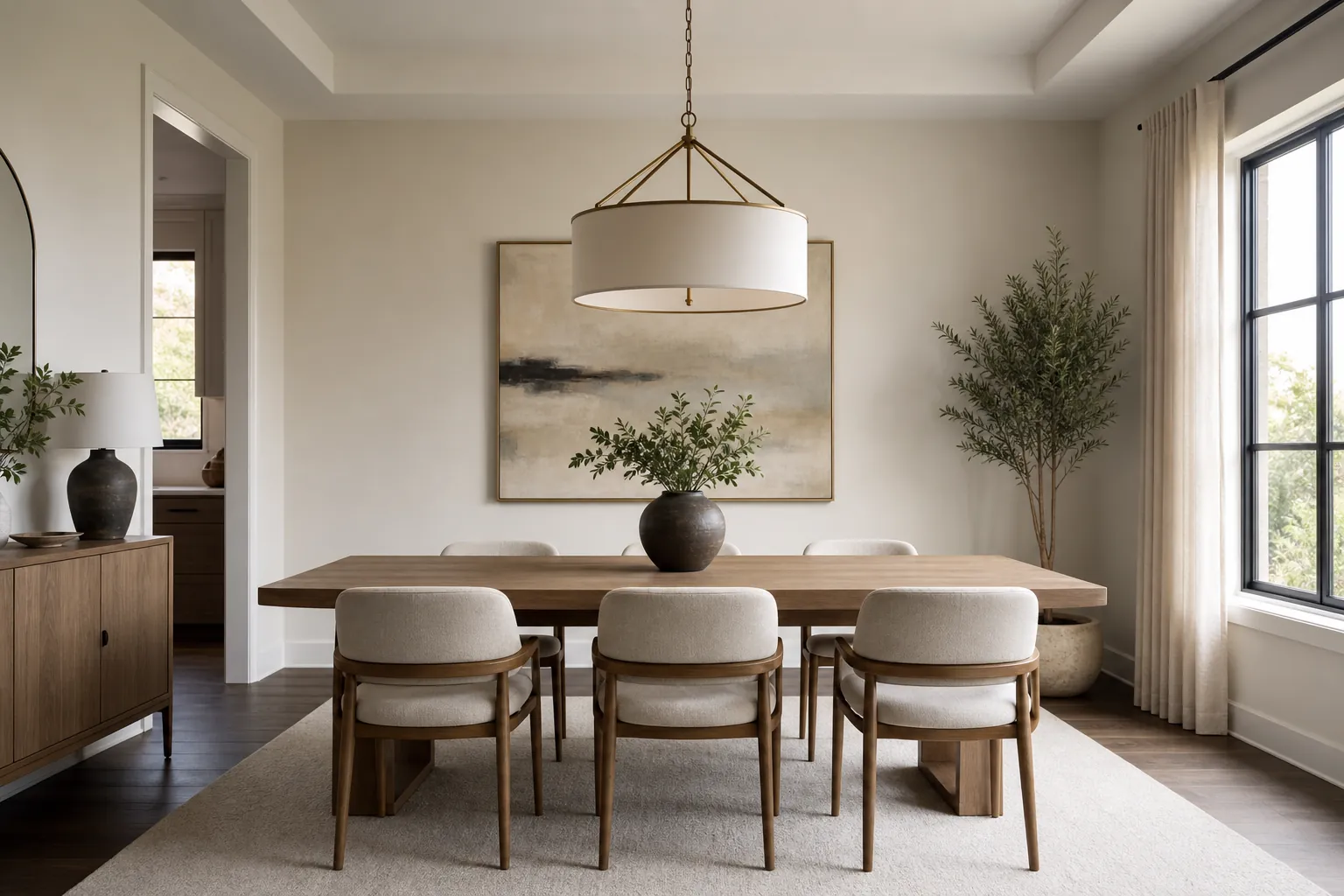
You should choose a table shape based on your room dimensions and how many people you plan to host daily.
| Table Shape | Best For | Concrete Example |
|---|---|---|
| Rectangular | Long, narrow dining rooms | Six-person family dinner |
| Round | Small or square rooms | Four-person breakfast nook |
| Square | Symmetrical dining spaces | Four-person intimate setting |
| Oval | Tight spaces with corners | Six-person social gathering |
| Extendable | Flexible hosting needs | Ten-person holiday meal |
Rectangular tables
A rectangular table is the most common choice for families because it maximizes seating capacity in elongated rooms. It suits households that host large groups frequently and have a dedicated dining area with enough length to allow for easy movement.
- Seats more people by adding chairs along the long sides.
- Creates a formal look when placed in the center of a room.
- Provides extra surface area for large serving platters.
- Fits well against a wall if you need to save floor space during non-meal times.
Use a table that measures at least 72 inches long to comfortably seat six people without crowding.
Round tables
Round tables are best for encouraging conversation because every person faces the center, making them ideal for small, social settings. They suit irregular or square rooms where sharp corners would create traffic flow issues.
- Eliminates sharp corners, which makes moving around the room easier.
- Promotes better interaction since there’s no “head” of the table.
- Fits into tighter corners or small nooks effectively.
- Allows you to squeeze in an extra chair more easily than at a flat edge.
A 48-inch diameter table is the standard size for four people; for each additional person, increase the diameter by 12 inches.
Square tables
Square tables offer a symmetrical, balanced look that works best in square-shaped rooms. They suit couples or small families who want a modern aesthetic and don’t require seating for more than four people on a daily basis.
- Provides equal distance between all diners for a balanced feel.
- Works well with matching square rugs to define the dining zone.
- Helps anchor a room that has too many rounded furniture pieces.
If you have a large room, you can push two square tables together to create a longer surface for special events. Note that these tables can feel restrictive if you try to seat more than one person per side, as the legs often get in the way.
Extendable tables
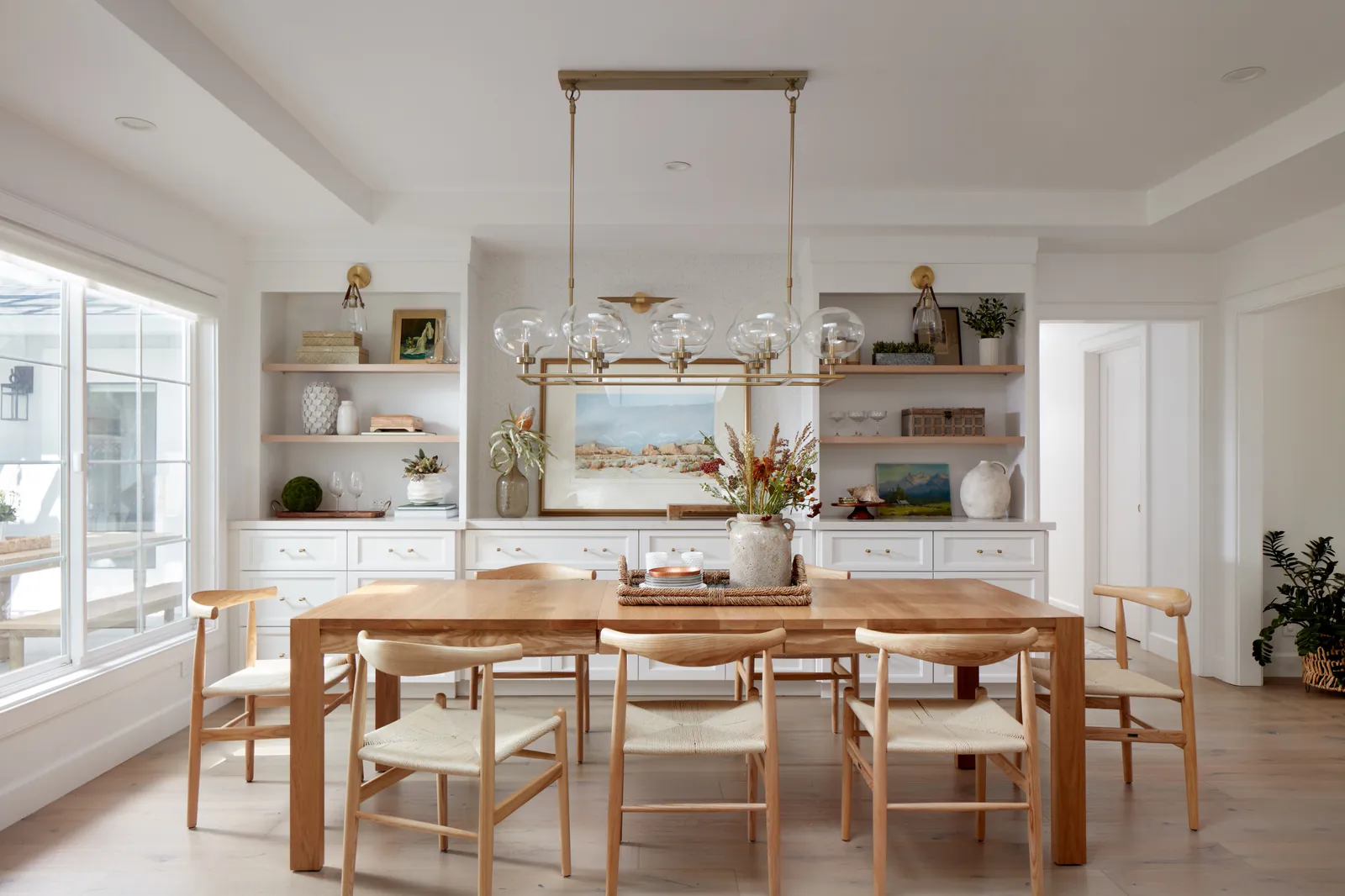
Extendable tables allow you to change the size of your surface based on the number of guests you have. They suit people who live in small homes but enjoy hosting large groups for holidays or parties.
- Conserves daily floor space by remaining in a compact state.
- Increases capacity quickly using internal leaves or drop-down sides.
- Provides long-term value as your hosting needs change over the years.
When choosing a model, check the ASTM International standards for furniture safety to ensure the locking mechanisms for the extension leaves are secure and stable. If the leaf isn’t locked properly, the table may tilt or collapse under weight.
Other dining table options
- Pedestal tables: These feature a single central leg rather than four corner legs, which provides more legroom for everyone sitting around the edge.
- Live-edge tables: These use slabs of wood with the natural edge preserved, which adds a rustic, unique look to modern or industrial dining rooms.
- Glass-top tables: These use transparent surfaces to make a small room feel larger and less cluttered, though they require frequent cleaning to remove fingerprints.
Steps to pick the right dining table
Your decision should rely on your room shape and your typical guest count. Decide if the table should be a focal point. Choosing one shape maintains room flow.
Frequently asked questions
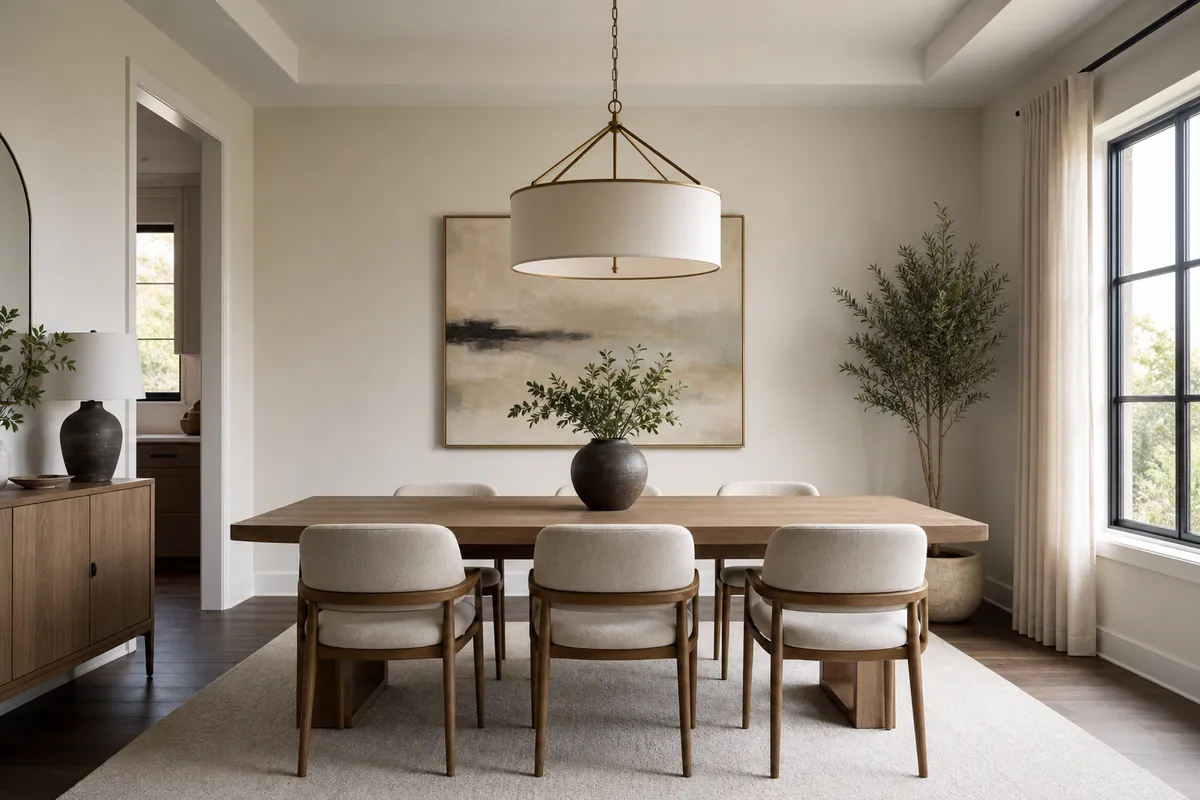
How much space do I need around my dining table?
You need at least 36 inches of clearance from the edge of the table to the nearest wall or furniture. This allows people to push their chairs back and walk behind them safely while others are seated.
How do I know if a table is sturdy?
A sturdy table shouldn’t wobble when you apply firm pressure to the corners. Check that the legs are bolted securely to the frame and that the tabletop doesn’t flex when you lean on it.
How often should I clean a wood dining table?
You should wipe your wood table with a soft, damp cloth after every meal to remove crumbs and liquids. Use a mild soap only if there’s a spill that the cloth can’t remove.
Is it safe to put a hot pan on my dining table?
It’s never safe to place hot pans directly on a dining table, as the heat can damage the finish or warp the wood. Always use a heat-resistant trivet or mat to protect the surface.
How long do most dining tables last?
Most solid wood dining tables can last for a very long time with proper care. The lifespan depends on the quality of the finish and how often you protect the surface from scratches and moisture.
What happens if my table legs are uneven?
Uneven table legs cause the surface to rock during use, which can lead to spills and structural stress. You can fix this by using adjustable levelers under the feet or a small shim under the shortest leg.
Does table height matter for chairs?
The standard height for a dining table is 28 to 30 inches, which requires chairs with a seat height of about 18 inches. Always measure the distance between the floor and the table apron to ensure your knees have enough clearance.
Conclusion
Measure your room’s width and length first to confirm the table size. Expect to see a clear path for walking once the table is placed. If the table blocks a doorway or makes the room feel cramped, choose a smaller model immediately.