
As an Amazon Associate, we earn from qualifying purchases. This post contains affiliate links – if you buy through them, we may earn a commission at no extra cost to you.
A comfortable desk chair under 200 dollars requires balancing cushion padding, back adjustability, and room size. Some seats prioritize deep foam and soft synthetic leather, while others rely on breathable mesh and posture support. The choice depends on whether you prefer a soft, lounge-style feel or firm lumbar control for long working days.
Best overall: Ergonomic Home Office Chair gives you dual-direction lumbar tuning, sturdy virgin foam, and a reinforced metal base built for daily desk work.
Most adjustable back support: Marsail Ergonomic Office Chair features independent two-way lumbar movement, 3D armrests, and an adjustable 2D headrest to support different postures.
Best for wide seating: Wider Seat Office Chair provides fold-flat armrests that widen the seat up to 47.64 inches, letting you sit cross-legged easily.
How We Picked
We eliminated any options that lacked declared hardware specifications or had unclear mechanical adjustment ranges.
1. Ergonomic Home Office Chair

Best for: Daily computer workers needing dialed-in lower back support.
This model pairs a contoured mesh back with a virgin foam seat that distributes body weight across long shifts. Its dual-direction lumbar support lets you adjust the cushion precisely against your spine to target fatigue.
The flip-up armrests make it easy to push the entire frame completely flush against a table edge, saving space. However, this design lacks an integrated headrest, so it won’t suit buyers who want full-height neck support while reclining back. Its reinforced metal base supports up to 330 lbs for reliable daily stability.
Pros
- Dual-direction lumbar adjustment fits spine curve
- Sturdy metal base holds 330 lbs
- Flip-up armrests slide under desks easily
Cons
- Doesn’t have a tall headrest
- Recline mechanism lacks multi-angle locks
2. Comfy Office Chair

Best for: Anyone wanting thick, plush executive-style sofa padding.
The double-cushioned build uses waterproof synthetic leather. Underneath, a 21.65-inch wide by 19.75-inch deep pocket spring seat cushion mimics the feel of a traditional couch. Sturdy iron legs replace typical plastic bases to keep the chair steady through continuous movement.
The chair reclines between 90° and 120°, letting you tilt back comfortably during phone calls or reading breaks. The thick synthetic leather doesn’t breathe, making it poor for hot rooms. Independent segmented padding targets your neck and lower back to keep you steady throughout the workday.
Pros
- Deep pocket spring cushion feels soft
- Heavy-duty iron legs ensure steady base
- Reclines smoothly between 90 and 120 degrees
Cons
- Solid leather covering limits air circulation
- Armrests can’t adjust in height
3. COMHOMA Big and Tall Office Chair Heavy Duty Wide Ergonomic
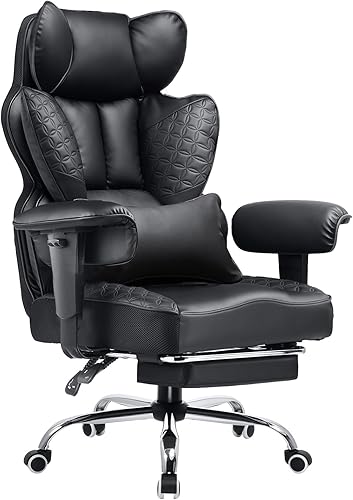
Best for: Buyers who want heavy-duty support with an integrated leg rest.
This chair features a wider backrest, built-in lumbar springs, and an extendable footrest. The recline mechanism leans back up to 145 degrees, turning the seat into a relaxed lounger whenever you need to step away from active typing. Its moderately firm pocket spring seat cushion provides plenty of room to bend or cross your legs.
The height-adjustable armrests accommodate various desk heights. The seller notes that each chair is handmade, which can result in slight variations in individual curves or embroidered details across batches. It isn’t suitable for shoppers looking for a minimalist, ultra-compact office piece.
Pros
- Reclines deeply back to 145 degrees
- Pull-out footrest supports full-body relaxation
- Height-adjustable armrests match desk heights
Cons
- Embroidery details may show slight handmade variations
- Larger frame requires substantial floor space
4. Wider Seat Office Chair

Best for: People who love sitting cross-legged at work.
Both armrests fold flat to 180 degrees, expanding seat width to 47.64 inches. Covered in soft teddy velvet fabric, the surface provides a cozy texture that feels gentle against bare skin.
The high-resilience foam cushion includes a removable lumbar pillow. Due to the high-pile teddy velvet material, this chair requires careful spot cleaning and won’t appeal to buyers looking for a sleek, formal corporate look.
Pros
- Armrests fold flat to expand seat width
- Includes pull-out footrest and lumbar pillow
- Soft teddy velvet fabric stays comfortable
Cons
- Textured fabric collects dust more easily
- Wide base requires generous floor clearance
5. Marsail Ergonomic Office Chair

Best for: Tall users wanting precise high-back and neck alignment.
The lumbar mechanism adjusts horizontally and vertically. That range of motion lets you set exact lower back reinforcement regardless of your torso height. A 2D headrest and a high-tension mesh back panel work together to keep air moving while holding your upper spine upright.
The 3D armrests shift, rotate, and flip up to slide under desks. While the 3.14-inch thick high-density foam seat cushion supports up to 330 lbs, users who prefer soft, sinking padding might find the firm ergonomic foam too rigid.
Pros
- Lumbar moves both vertically and horizontally
- 3D armrests rotate, slide, and flip
- 2D headrest cradles upper neck muscles
Cons
- Dense seat foam feels relatively firm
- Many adjustment knobs require initial setup
6. OLIXIS Home Office Chair

Best for: Anyone wanting a lightweight, breathable, straightforward computer seat.
The open mesh back conforms to your spine and promotes airflow.
The seat height adjusts from 18.5 to 22.2 inches via gas lift. The armrests are fixed directly into the frame, meaning you can’t adjust their height or fold them away, which won’t suit buyers who need clear clearance under low drawers.
Pros
- Breathable mesh prevents heat and sweating
- Seat height is fully adjustable to fit your body size and personal needs
- Assembly completes quickly in fifteen minutes
Cons
- Fixed armrests can’t move or fold
- No independent lumbar depth adjustment knob
7. GYI Ergonomic Office Chair with Memory Foam Cushion

Best for: Heavier frames wanting extra-thick pressure relief under their hips.
The standout component on this heavy-duty model is its 4.7-inch thick memory foam cushion, specifically tailored to distribute weight without flattening out. A breathable technical mesh back provides firm, sag-resistant support designed to hold wider, heavier torsos without sagging backward.
The 3D armrests adjust to suit your forearms and can flip upward to let the chair push completely beneath a desk in compact home offices. However, this heavy-duty build doesn’t include an upper headrest, so it isn’t built for users who want resting neck support during breaks.
Pros
- Extra-thick 4.7-inch memory foam seat cushion
- High 350-lb maximum weight rating
- Flip-up 3D arms clear room space
Cons
- Lacks a headrest for neck support
- Heavy metal frame takes effort to lift
8. GTPLAYER PU Leather Office Chair
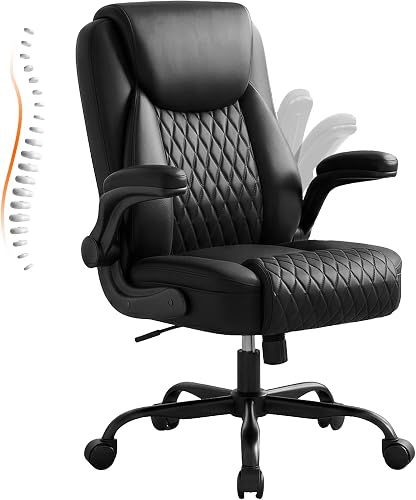
Best for: Small office layouts that need a sleek, executive appearance.
This chair utilizes skin-friendly PU leather detailed with a diamond-stitched breathable center panel that promotes airflow better than plain solid vinyl. The winged mid-back contours to your spine to minimize strain during extended computer work.
Its padded 90-degree flip-up armrests fold away instantly, letting you slide the seat flush against standard tabletops to keep walk spaces clear. Because it uses a mid-back profile without an upper head extension, it won’t suit taller workers who need continuous neck stabilization.
Pros
- Diamond-stitched leather increases overall air flow
- 90-degree flip-up arms optimize room floor space
- SGS Class 3 lift supports 300 lbs
Cons
- Mid-back height offers no head support
- Armrests don’t swivel horizontally
9. Amazon Basics Classic Puresoft PU Padded Mid-Back Office Desk Chair

Best for: Buyers who want basic, uncomplicated desk seating with soft padding.
Finished in smooth black PU upholstery, this mid-back chair provides a classic executive appearance with contoured padding along the seat, back, and armrests. A sturdy KD metal base gives the unit a solid anchor, supporting users up to 275 lbs across standard office tasks.
The seat measures 19.5 inches wide by 17.75 inches deep, offering standard proportions that fit neatly into tight workspaces. However, the armrests are permanently fixed in place between 26.25 and 30 inches high, so you can’t fold them up or slide them past low desk aprons.
Pros
- Soft contoured padding across back and arms
- Solid KD metal base supports 275 lbs
- Straightforward levers for height and tilt
Cons
- Fixed arms can’t flip or lower
- Compact seat depth may feel shallow
10. DUMOS Criss Cross Chair
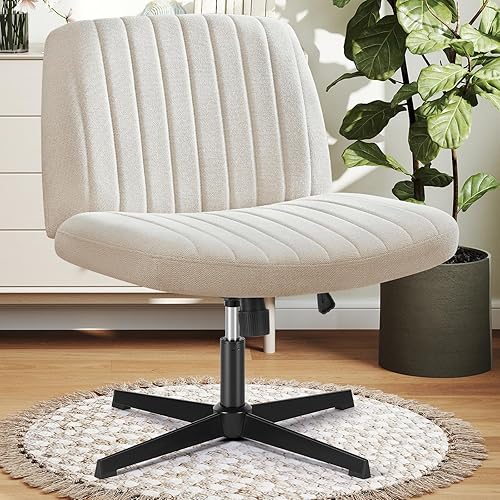
Best for: Cozy desk corners and casual, cross-legged vanity setups.
Designed entirely without armrests, this chair features a wide, U-shaped high-density foam cushion that gives you complete freedom to sit cross-legged or lounge sideways. Its padded backrest supports the lumbar spine while maintaining an open silhouette that tucks completely under any desk or vanity table. The base features non-slip, scratch-resistant stationary pads that protect hard flooring while keeping you planted.
Pros
- Wide armless cushion permits cross-legged seating
- Stationary pads protect sensitive wood floors
- Compact profile tucks under low tables
Cons
- Lacks wheels for rolling around workspaces
- Has no armrests for forearm support
Also Worth Considering
The NEO High Back Mesh Chair offers a taller back design with adjustable lumbar tracking for users who prefer full-spine mesh coverage over foam cushions.
How to Choose a Comfortable Desk Chair Under 200
Should I choose breathable mesh or padded leather?
Select mesh if your workspace runs warm or you tend to build up heat during long working sessions. The open weave keeps air moving against your back all day long. Choose leather or thick foam cushioning if you prefer a plush, couch-like sensation and want a smooth surface that wipes clean quickly after accidental spills or dust buildup.
How do I know if the armrests will fit my desk?
Measure the distance from your floor to the bottom edge of your desk drawer or tabletop before buying. Fixed armrests require enough open vertical room to slide forward, which can block the chair from tucking away. If you work in a tight room, choose flip-up armrests or an armless seat to ensure the chair slides completely under the desk.
What base and gas lift details should I look for?
Look for verified weight ratings and independent component certifications like SGS or BIFMA to ensure long-term mechanical reliability. Chairs that meet BIFMA furniture safety standards provide tested structural ratings for weight distribution, tilt resistance, and base durability under repeated daily movement. Metal and iron bases generally handle greater maximum capacities up to 350 lbs compared to simple nylon assemblies.
If you need the strongest balance of posture alignment and dependable parts, get the Ergonomic Home Office Chair. If you want maximum couch-like cushion depth instead, go with the Comfy Office Chair. Take a quick measurement of your desk height right now to ensure the armrests and seat travel match your work surface cleanly.
Frequently Asked Questions
What maintenance does a desk chair need after assembly?
Check and tighten all structural frame bolts and armrest screws after your first month of daily use. Continuous weight shifts and tilting may loosen hardware, which causes wobbling or squeaking. Wipe smooth synthetic leather with a damp cloth, while mesh backs and fabric cushions benefit from a quick pass with a vacuum attachment to pull dust out of the weave.
What component usually wears out first on an office chair?
Lower-density seat foam often compresses and flattens out after months of continuous sitting, reducing under-thigh support. Caster wheels can also collect hair and carpet fibers inside their axels, which prevents them from rolling smoothly across floors. Selecting chairs with high-density foam, pocket spring cores, or memory foam helps keep the seat cushion resilient against body impressions over longer periods.
Can an armless desk chair provide enough support for full workdays?
An armless chair can easily support long sessions if you sit upright with your elbows resting naturally on your desk surface. Models like the DUMOS Criss Cross Chair provide deep, shaped foam cushions and curved lumbar backrests that align the lower spine properly. However, if your desk is too high to rest your arms comfortably, an armless design will place extra strain on your shoulders.
Will a simple desk chair work well enough for a basic home office?
A straightforward chair like the Amazon Basics Puresoft Chair works well if you simply need a padded seat for routine typing and general study tasks. It gives you standard pneumatic height adjustment and a recline that resists your weight comfortably without an overwhelming array of levers. If you suffer from frequent lower back soreness, stepping up to a model with dedicated 4-way adjustable lumbar support will serve you better.
Conclusion
Once you’ve narrowed down your favorites, don’t hesitate to check the return policy before you finalize your purchase. It’s worth testing the seat for a few days to see how your back feels after a long afternoon. You’ll be much happier once you’ve found the perfect fit for your daily routine.