
As an Amazon Associate, we earn from qualifying purchases. This post contains affiliate links – if you buy through them, we may earn a commission at no extra cost to you.
An ergonomic desk chair under 200 dollars should offer the right adjustability, weight limits, and comfort for your daily sitting time. Some models focus on multi-point spine support and movable headrests, while others rely on thick foam cushions, flip-up arms for small rooms, or heavy-duty frames.
Best overall: SIHOO M18 Ergonomic Chair offers 4-point support, an adjustable headrest, and an 8-step assembly backed by a 3-year parts warranty. Most adjustable features: CAPOT Ergonomic Mesh Chair provides 8-level micro-adjust lumbar support, a 3-position tilt lock, and flip-up armrests rated for 400 pounds. Best for long hours: Ergonomic Molded Foam Chair uses a four-inch molded foam cushion and an adjustable lumbar pad designed for eight-hour workdays.
How We Picked
We compared 48 Amazon listings for clear structural, adjustment, and warranty details. Every chair had to list its exact user weight limit, base build, and specific back or head adjustments to make the list. We cut products that left out adjustment ranges, used vague dimensions, or gave no direct details on post-purchase replacement part coverage.
1. SIHOO M18 Ergonomic Office Chair

Best for: Daily computer workers needing full spinal support
This chair provides four targeted support points across the head, back, hips, and hands. The mesh backrest prevents heat buildup. Its lumbar pad adjusts alongside the seat height and headrest, letting you adapt the frame to your spine’s natural shape.
The structure holds up to 150 kg and has passed both the BIFMA durability test and an 1136 kg static pressure test. Because the manufacturer specifies a height range of 5’6″ to 6’2″, shorter individuals might struggle to place their feet flat on the floor or align the headrest comfortably. Assembly takes eight steps using the included visual instructions.
Pros
- Supports up to 150 kg
- 3-year warranty for replacement parts
- Adjustable headrest and lumbar support
Cons
- Unsuitable for users under 5’6″
- Armrests don’t flip upward
2. CAPOT Ergonomic Mesh Office Chair
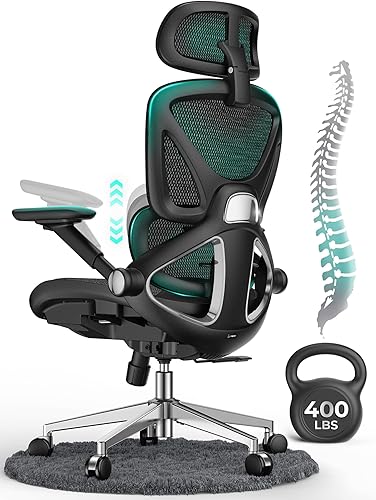
Best for: Workers wanting deep lower back adjustments
The backrest features an eight-level lumbar mechanism that moves across two inches to target the L1 to L5 vertebrae. You can lock the back angle at 90, 110, or 125 degrees depending on your posture.
A stainless steel base and an SGS gas cylinder support loads up to 400 lbs without sinking. The padded armrests flip up 90 degrees, allowing you to slide the seat fully beneath standard desks. However, buyers shorter than 5’5″ fall outside the listed user height specifications, meaning the headrest and lumbar curve won’t align correctly.
Pros
- High 400 lbs weight capacity
- 8-level micro-adjust lumbar support
- 60-month complimentary parts warranty
Cons
- Sizing excludes users under 5’5″
- Requires 30-minute full frame assembly
3. Ergonomic Molded Foam Chair

Best for: People who prefer thick seat padding
This model relies on a dense four-inch molded foam cushion that evenly spreads sitting weight across the hips and thighs. The contoured mesh back includes an adjustable lumbar pad to relieve strain during long shifts. A tension knob underneath lets you customize the rocking resistance when taking breaks.
A reinforced metal base gives the unit a 350-pound weight rating for lasting daily stability. The flip-up armrests let you tuck the entire frame under narrow tables to clear valuable floor space. Because the chair lacks a dedicated headrest, it isn’t the right choice for tall buyers who require direct upper neck support.
Pros
- Substantial molded foam cushion
- Sturdy 350 lbs metal base
- Space-saving flip-up armrest design
Cons
- Lacks a dedicated headrest
- Recline mechanism doesn’t lock
4. Ergonomic 400lbs Capacity Chair
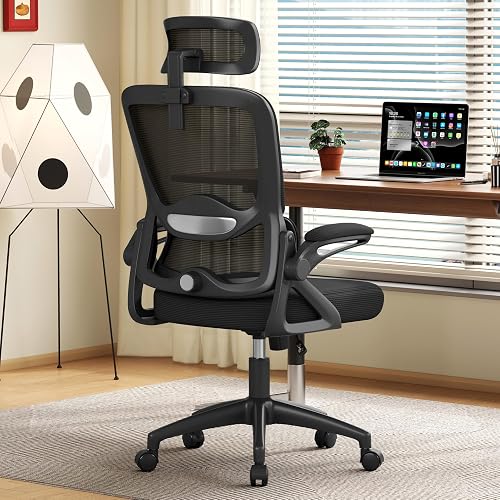
Best for: Heavier users wanting wide seat dimensions
The lumbar support pad also slides 1.57 inches up and down, matching users between 5’1″ and 6’1″ tall. You can reposition the 3D headrest to match different sitting angles throughout the day. It doesn’t offer independent seat depth adjustment, so those with longer legs can’t extend the cushion forward.
Pros
- Strong 400 lbs weight rating
- Rotary knob lumbar angle adjustment
- Fits users down to 5’1″
Cons
- Fixed seat depth position
- Bulky frame occupies wider space
5. Ergonomic Lower Back Chair

Best for: Desk users seeking active lumbar relief
This chair focuses on lumbar posture support with a movable lower pad and a breathable mesh back. The seat cushion uses virgin foam. You can adjust the headrest, raise or lower the seat height, and utilize the smooth rocking function during downtime.
The structure features an SGS-tested cylinder and BIFMA-certified parts holding 330 lbs. Padded flip-up armrests allow for easy storage under shallow computer tables. Because the backrest tilts as a free rocking unit without distinct multi-angle stops, you can’t lock it into deep reclined angles.
Pros
- BIFMA-tested 330 lbs frame
- Virgin foam comfort seat cushion
- Generous 5-year post-purchase warranty
Cons
- Backrest doesn’t lock tilted
- Limited armrest height adjustments
6. Ergonomic Reclining Desk Chair

Best for: Users who want to rest midday
A built-in retractable footrest and a deep reclining back make this seat suitable for both typing and resting. The backrest locks at any chosen angle between 90 and 145 degrees. The linkage armrests shift with the backrest to support your forearms while leaning.
The lumbar area uses a movable crossbar that adjusts forward and backward by two centimeters to match your spine. Because the linkage arms attach directly to the seat and back, you can’t flip them up out of the way.
Pros
- Reclines and locks to 145°
- Pull-out padded leg rest
- 2cm adjustable depth lumbar system
Cons
- Armrests can’t flip upward
- Larger footprint requires extra clearance
7. HOLLUDLE Ergonomic Mesh Office Chair

Best for: Buyers who want high arm adjustability
This model features 3D armrests that move up and down, slide forward and backward, and rotate inward or outward. The 3D lumbar support adjusts in height, depth, and angle to support your lower back. Its silver V-shaped frame holds an EN1335 and BIFMA certified steel mechanism.
The base withstands up to 1136 kg of static force, and the mesh back offers three lockable recline positions. Its 2D headrest rotates and shifts vertically to cradle your neck. However, the seat uses a taut mesh surface rather than soft foam, which won’t appeal to buyers who prefer thick cushion padding.
Pros
- 3D adjustable armrests and lumbar
- Multi-position tilt-locking backrest
- Certified to EN1335 safety standards
Cons
- All-mesh seat lacks foam cushioning
- Complex parts require careful assembly
8. NEO CHAIR Office Desk Chair

Best for: Small apartments and compact study desks
Designed for tight workspaces, this chair has a trim footprint and flip-up arms. The contoured backrest supports an upright posture while the elastic mesh material lets air circulate behind you. An internal wood frame adds rigidity, and the SGS-certified cylinder delivers stable height changes.
The chair swivels 360 degrees on smooth-rolling casters and includes a tilt-tension adjustment knob for gentle rocking. It provides basic posture support for normal work tasks, but it lacks a headrest and doesn’t have an adjustable lumbar pad. It isn’t built for users who require specialized physical support during prolonged shifts.
Pros
- Compact frame saves floor space
- Padded flip-up space-saving arms
- Certified FSC wood internal structure
Cons
- Lacks a headrest completely
- No separate lumbar adjustment mechanism
9. Marsail Ergonomic Office Chair

Best for: Tall users wanting deep back support
The high-back frame features a 3.14-inch thick seat cushion that distributes weight across an expanded seating area. The lumbar support mechanism adjusts 2.16 inches vertically and 1.18 inches horizontally, allowing you to fine-tune spinal alignment. The backrest tilts from 90 to 120 degrees to accommodate different tasks.
This chair features versatile armrests that adjust in three dimensions and also flip up when you want to clear desk space. The rugged frame holds up to 330 lbs and rolls on quiet swivel wheels. At 3.14 inches of thickness, the firm high-density foam seat may feel unyielding for people who prefer plush padding.
Pros
- 4-way adjustable lumbar mechanism
- 3D arms that also flip up
- Wide 330 lbs capacity frame
Cons
- Firm foam cushion requires break-in
- Maximum recline stops at 120°
10. SONGMICS Ergonomic Mesh Office Chair with Adjustable Lumbar Support

Best for: Fast assembly and simple adjustments
This chair sets up quickly using labeled hardware, with most assemblies taking between 20 and 30 minutes. A foam-padded lumbar pad shifts up and down to match your lower back height.
A heavy metal base and reliable cylinder support up to 331 lbs, while seat height offers a versatile range of adjustment. The backrest reclines between 90 and 105 degrees for mild relaxation, and the armrests flip up cleanly. The modest 105-degree tilt range means it won’t suit buyers who want to lean far back.
Pros
- Thick 3.5-inch foam seat cushion
- Sturdy 331 lbs metal base
- Fast 20 to 30-minute setup
Cons
- Recline angle tops out at 105°
- Armrests only flip, no height adjustment
Also Worth Considering
- FelixKing Office Chair: A high-back mesh model that features an adjustable lumbar support curve and flip-up armrests for clean desk clearance.
- Office Chair Ergonomic Desk Chair: Built for extended work hours with a robust 330-pound carrying capacity, rolling casters, and high-back lumbar padding.
- Yaheetech Ergonomic Office Chair: A straightforward mesh computer chair equipped with an integrated headrest and lower back framing for daily home office tasks.
How to Choose in Sixty Seconds
Does your workspace have tight clearance?
Look for a chair with 90-degree flip-up armrests. Models like the NEO CHAIR Flip-Up Armrests and the SONGMICS Ergonomic Mesh Chair swing up completely. This lets you push the seat fully under the desktop, clearing valuable floor space in small bedrooms. Chairs with fixed linkage arms remain outside the desk frame, taking up extra room.
How much lumbar control do you actually need?
If you suffer from regular lower back stiffness, choose a chair with multi-directional lumbar travel. The Marsail Ergonomic Office Chair moves both vertically and horizontally, while the CAPOT Ergonomic Mesh Chair provides eight distinct support depths. Basic fixed backrests provide broad posture support, but they can’t adapt to subtle differences in spinal curvature.
Should you pick molded foam or full mesh?
Molded foam cushions, like the four-inch seat on the Ergonomic Molded Foam Chair, disperse heavy hip pressure and retain their structure over long shifts. In contrast, all-mesh surfaces maximize airflow to keep you cool in warm rooms. Foam provides softer support for bony hips, while mesh offers a firmer, suspended feel that never flattens out.
The SIHOO M18 Ergonomic Chair remains our top overall recommendation for balanced posture support and verified testing standards. If you require deep lower-back adjustments and higher load ratings, the CAPOT Ergonomic Mesh Chair is the ideal alternative. Check your desk clearance and ceiling height before placing your final order.
Related guides
- 10 Best Ergonomic Chairs Under 200: Our Expert Picks
- 10 Best Ergonomic Chair Under 150 Options for Your Workspace
- 10 Best Ergonomic Office Chairs Under 600 for Your Workspace
Frequently Asked Questions
What safety standards should I look for on an office chair?
Look for certification marks from independent testing groups like the Business and Institutional Furniture Manufacturers Association (BIFMA). A BIFMA X5.1 rating confirms that the gas lift, base, and backrest have undergone static pressure and impact tests. Chairs like the SIHOO M18 and CAPOT state these standards to verify their structural strength under daily loads.
What chair maintenance is required after assembly?
The constant movement of tilting, rolling, and armrest use can slowly loosen the hardware under the seat. Wipe mesh surfaces with a damp cloth to remove settled dust, and periodically clear trapped hair or carpet fibers from the caster wheels to keep them rolling smoothly.
Which part of a desk chair usually wears out first?
The gas lift cylinder and caster wheels typically show wear before the structural frame fails. Choosing chairs with certified Class-4 gas lifts, such as the Ergonomic 400lbs Capacity Chair, helps prevent unexpected height drops.
Is a simple desk chair without a headrest good enough?
A basic chair without a headrest works fine if you sit strictly upright and work for only a few hours at a time. Chairs like the HOLLUDLE Ergonomic Mesh Chair prevent head and neck fatigue during long work sessions.
Conclusion
Once you’ve measured your workspace, check the return policy before you finalize your order. It’s worth testing the seat for a few days to see how your back feels after a long shift. Don’t settle for discomfort; you’ll be glad you took the time to find a perfect fit.